Objective 1: Create a brochure for victims of a felony crime introducing them as to how their case travels through the courts
Activities/Resources
· Apply my old law notes from school to current cases victims face
· Research the areas my notes miss
· Observe court room proceedings and conferences
· Ask my co-workers questions about terminology and victims’ rights
Evidence
· Include final brochures that have been approved by my supervisor
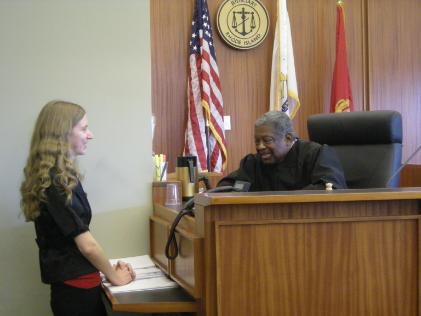
Above the judge and I are discussing legal terminology and court proceedings.
The below links present three brochures on the legal process and victim’s right. The first one is a quick overview that highlights the important points of both. The other two are more in-depth explanations of the legal process directed specifically towards victims in order to answer the types of questions the victim wants to know about the process and how they will be protected or given opportunities based on the rights afforded to them by RI law. As I learned in my political science class, Introduction to the Legal System, the process that a case goes through can be extensive depending on how long the case stays in the system. The further into the system there is naturally more information that a victim needs to know. I quickly learned that many of the victims had no prior knowledge of the legal system. So I had to stop assuming the victims knew the terms I was using and break everything down step by step. Because the legal system is so complex, I had to figure out what was key to the victim’s plight during the court procedures. Therefore, I became well versed in the rights of victims provided by the RI general law. Unlike a classroom setting where I could repeat back all the cold facts of the court system I had to figure out a way to convey to the victims the cold truth without the system appearing heartless in these brochures. Since the victims are relying on this system to obtain the justice they desire I never wanted to anger, frustrate, or displease them anymore than they already were when dealing with the flaws in the court system, so I learned to choose my words with care. Therefore, the final products showcase my ability to comprehend a complicated system and then mindfully convey the essential facts that a specific audience needs to know with empathy.
In order to make these finished brochures I reviewed the old notes I kept from my political science class. Then I paid attention to the court room proceedings, sat in on pre-trail conferences in the judge’s chambers, and paid attention to the lawyers and my supervisors when they were explaining the system to the victims. If anything that happened in conference or court confused me I made sure to ask my supervisor or a lawyer. Lastly, I found the statue that outlines the victims’ rights, read it, and outlined all the main components important to all victims rather than specific ones. With all of this information I created the brochures and then had my supervisor approve them. She especially helped me with my first brochure by giving me suggestions as to how I could re-word my brochure so that my work was conveyed in a more compassionate manner. With her explanations in mind I was able to create the other two brochures without a problem.
Introductory to the Legal System and Victims' Rights brochure
Events Before a Trial brochure
Trial,Sentencing, and Probation brochure
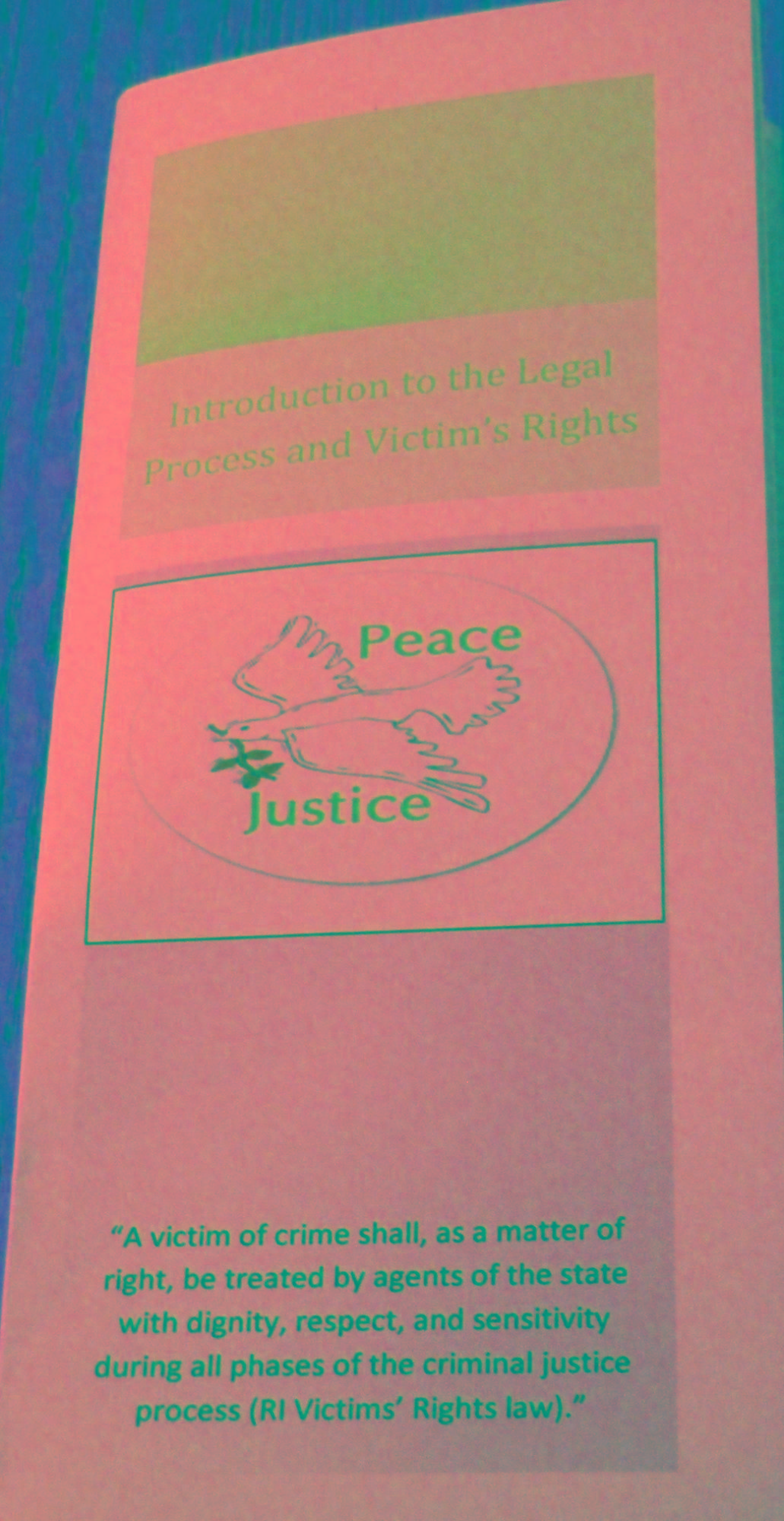
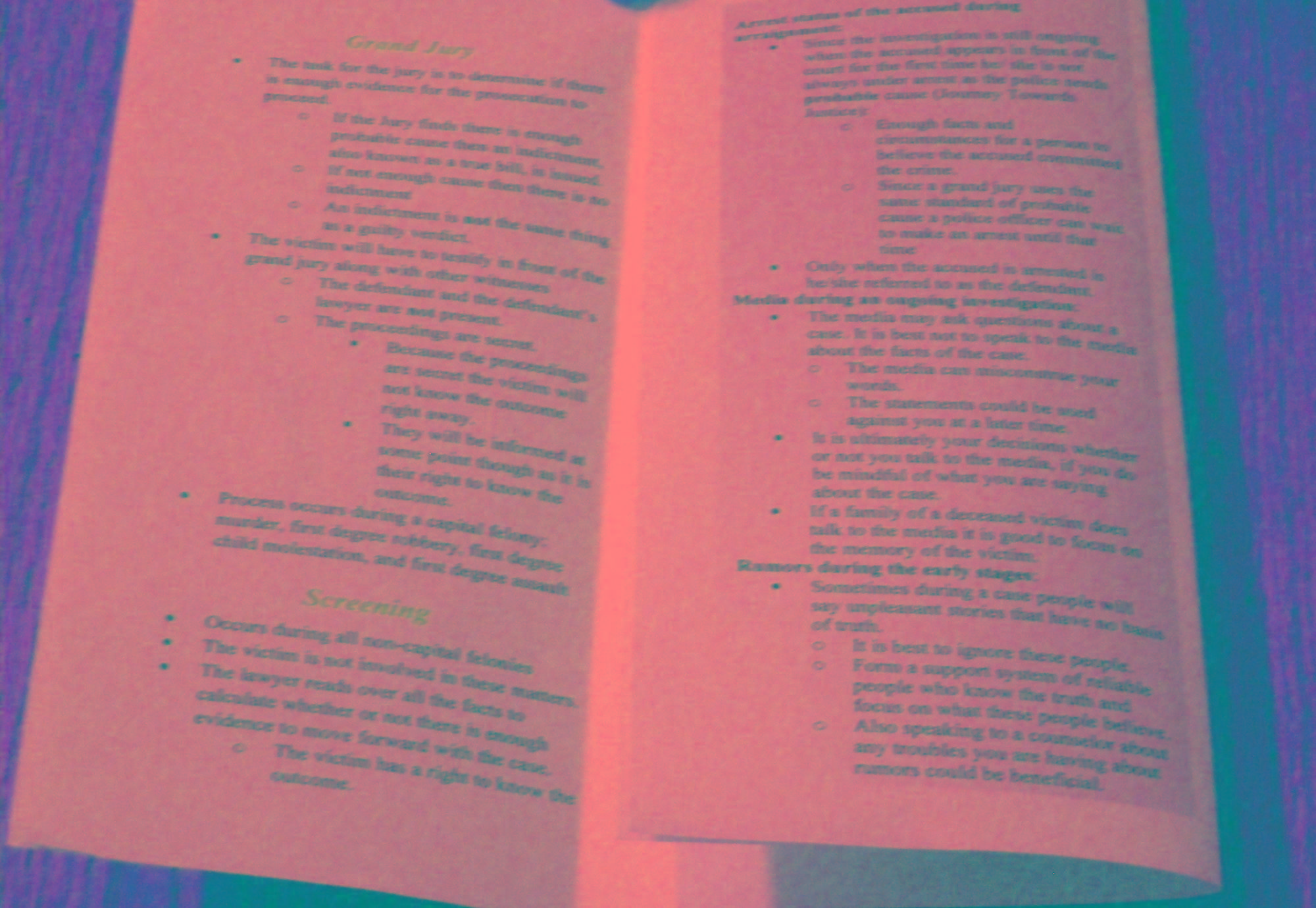
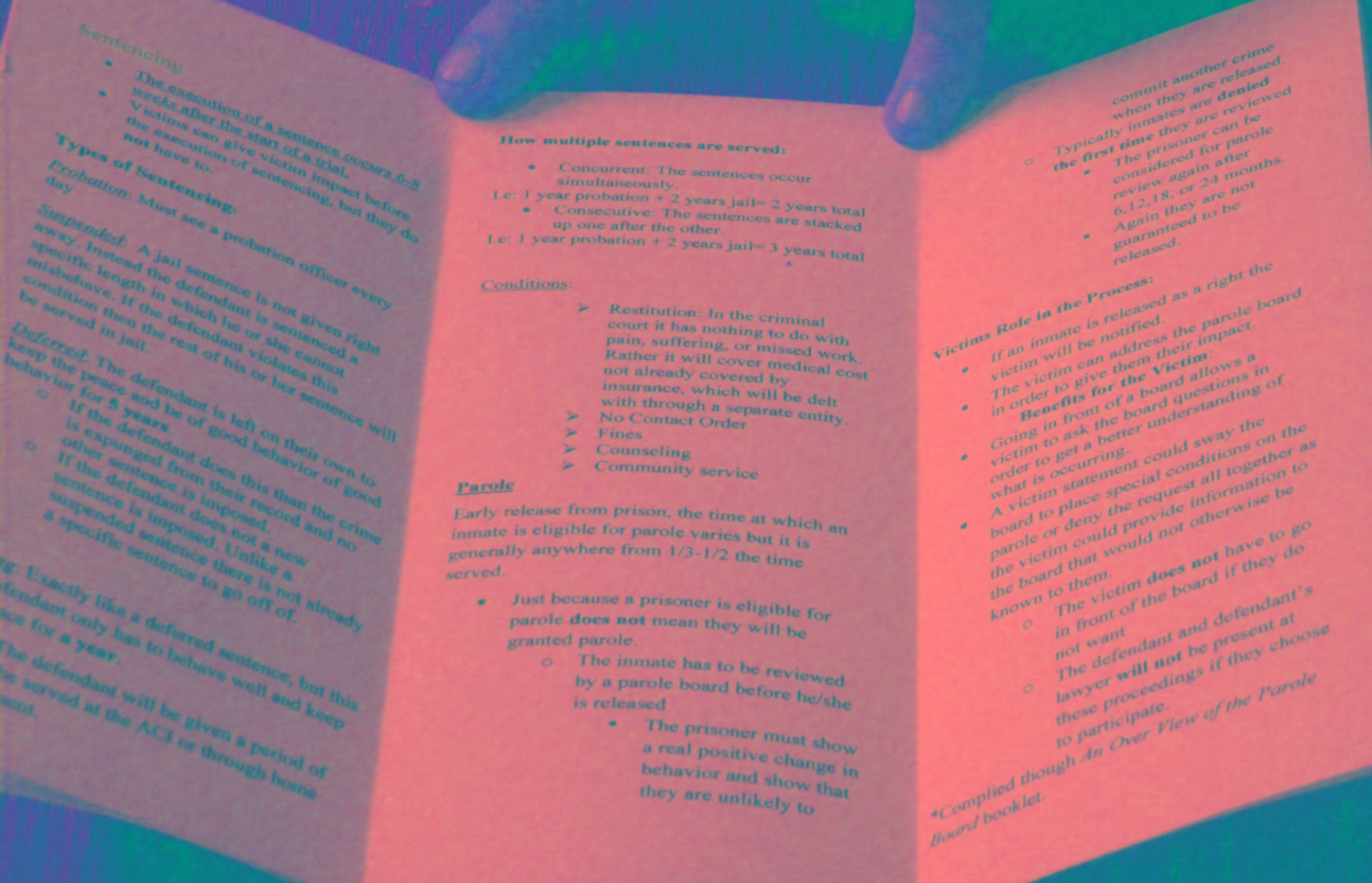
Above are the cover, inside folds, and full inside text of the brochures to provide for a mental picture of how a brochure actually looks.
Next page: Annotation Two & Evidence
Go back to or jump to: Summary of Experience, Learning Contract, Annotation Three & Evidence